Showing posts with label Northern Iloilo. Show all posts

Cabatuan Church

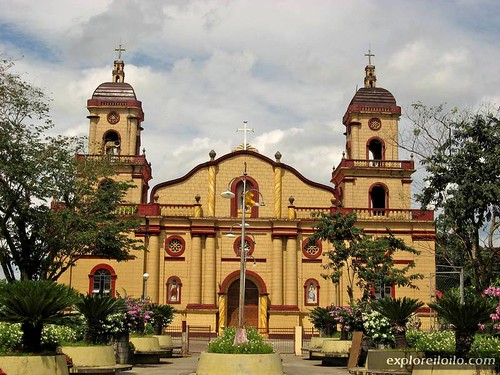
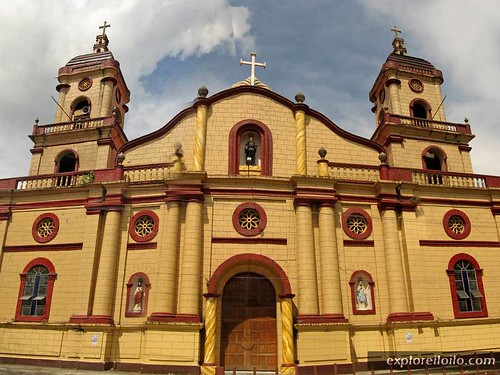
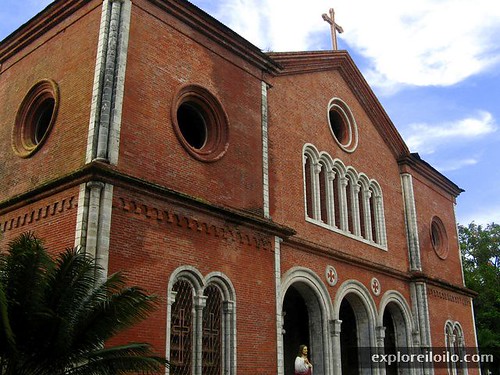
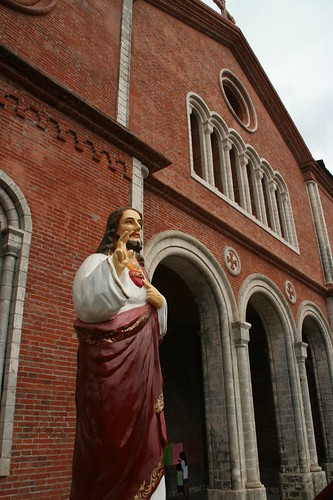
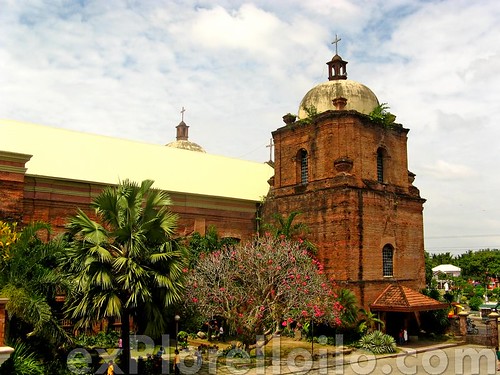
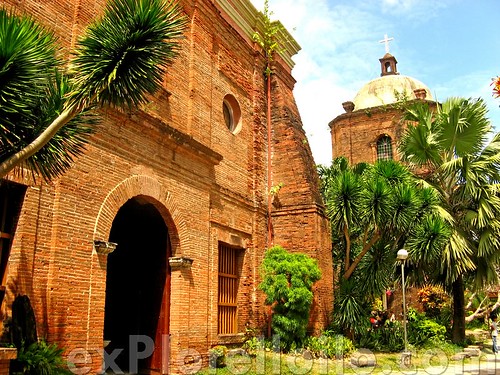
Cabatuan was a visita since the early 1600's. Formerly called Batuan, early Cabatuananons practice the Sinulog or the Dance of Death. It became an independent parish in 1732 and the present church was built in 1833 and was finished in 1866. It was noted to be the largest church in northern Iloilo. It was adored so much that El Eco de Panay described it as the 'Model of Temples'. It is the only church in Iloilo which once had three facades and six belfries, in spite of this, four of these belfries were destroyed in the 1948 earthquake.The Church which is Tuscan in style imposes heaviness and massiveness. Its overall design is that of a majestic basilica, making it not any usual church. The ornate retablo on the apse is believed to be one of the tallest retablos in the Philippines while the two large baroque pulpits are carved with ornate wooden reliefs.The Main facade is primarily decorated with Tuscan pilasters and ornate Agustinian symbols, while the eastern and the western facades remained in the Renaissance form. The belfries which might be Moorish or Byzantine in style, contribute a medieval Baroque supremacy.
Photos by: Explore Iloilo

Dingle Church

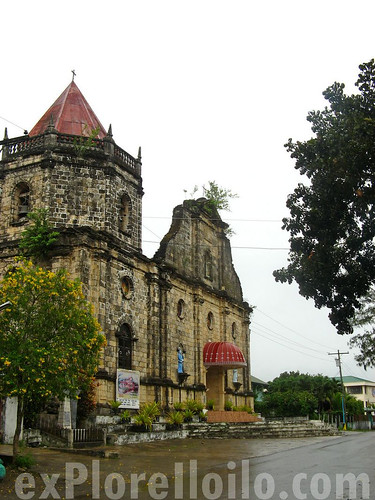
A visita of Pototan, Baong now Dingle, was made an independent parish in 1611. The present church was constructed in 1829 and was finished in 1874. Like the churches of Calinog, Lambunao and Duenas, the facade is given a curvilinear motion as imposed by the wavy pediment. However the absense of one belfry distinguishes it from the others. Rose windows dominate the upper level of the walls. It is solidly built of yellowish limestone and runs through the Neoclassic line of architecture.

Santa Barbara Church

Formerly called Catmon, Santa Barbara was made an independent parish in 1760 under the advocation of Santa Barbara Virgin y Martir. The present religious structure was built in 1855 and was finished in 1878.

Under the Tuscan Order, the facade is given a baroque drift by graceful broken arches and ornate finials. The three-storey affair of the facade is brought by an extravagant and excessive use of cornices and niches.

The convent of Santa Barbara is the cradle of Iloilo's Revolutionary government since it was made the headquarters of Gen. Martin Delgado, who struggled the odds to free Iloilo from the grasp of the Spaniards. It was successfully restored on the town's 220th anniversary. The convent is an example of Moorish architecture. A design commonly seen in Southern Spain. Today, both the church and the convent are declared as National Heritage Sites.
Duenas Church

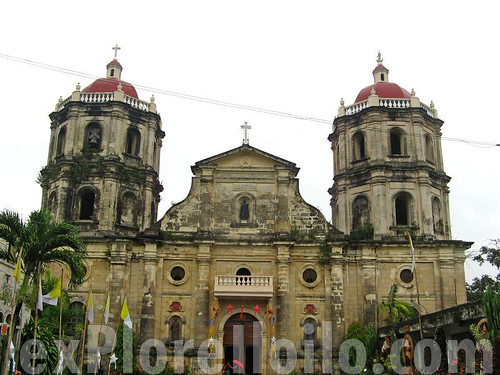
The facades of Duenas, Lambunao, Calinog and Dingle Churches share numerous similarities. Somehow, the belfries of these churches distinguish them from each other. The Church of Duenas on the other hand is more ornate. The overall impression is uniquely baroque, but Neoclassic features are evident within the church's pretenses. The facade, like other neoclassic churches, is carved with broad tuscan pilasters overlayed with round columns. The pediment possesses a wavy outline which gave the church a fine Baroque movement.
The belfries which flank the facade are extraordinarily beautiful. Both belfries are baroque in the finest form. Each side of these octagonal towers are decorated by large romanesque windows, thus giving the church a lighter and cooler feel.
photo from: http://www.exploreiloilo.com/

Lambunao Church

Lambunao was once a visita of Duenas, the town finally became an independent parish in 1753. Constructed in 1880 and finished 10 years later, Lambuano church is a beautiful example of Neoclassic Architecture with Baroque and Roman essentials. The Facade is divided by twinned columns each crowned by finials. The belfries which flank the facade are finely decorated with balusters and pilasters of varied shapes.

Janiuay Church Ruins


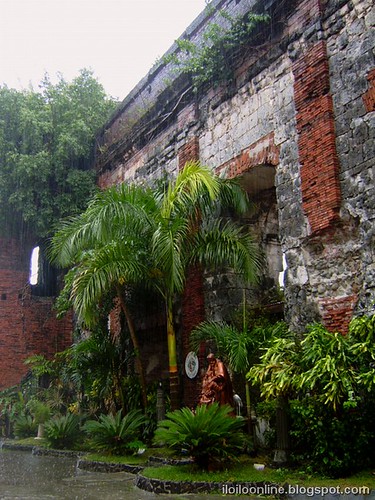
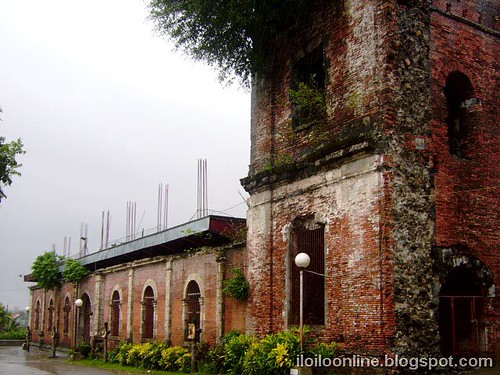
Located on a hill overlooking the town plaza, the ruins of the Neoclassic Church of Janiuay stands overshadowing the newer one. The old Church of Janiuay was once a grand neoclassic church with byzantine elements. Clean bricks and yellowish limestones were used to construct this beautiful house of worsip. Finished in the late 1800's the church of Janiuay suffered the torments of war in World War II. In the regime of the Japanese occupation, the Church was burned and the bricks from the ruins were used to construct the Japanese's Tiring Landing Field, now the New Iloilo Airport in Cabatuan.
Photos By: http://www.exploreiloilo.com/

Passi Church


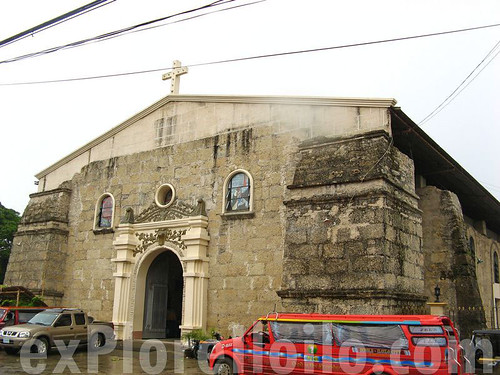
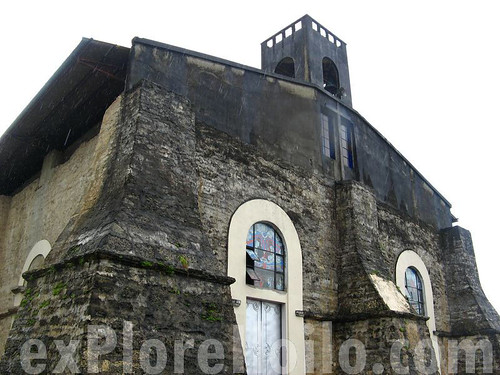
Founded in 1584, Passi is now a chartered city in the Province of Iloilo. It is authentic that Passi City had the most colorful people in the island, the Pintados. However, the history of the church could be traced back in the early 1600's but the present church was initiated in 1821-1837. The architectural style is perhaps undistinguished but it might be referred as Baroque. It is one of the largest in Iloilo and all sides are dominated with massive butresses. There is a confusion about the original location of the facade. The design is primitive yet there is an artistic carving on which is possibly the facade.

photos by: Explore Iloilo

Calinog Church

Formerly called Binocsucan, Calinog was founded in 1742. It became an independent parish in 1767 and the present church was built in 1874. The facade is similar with the facades of the churches in the northernmost part of Iloilo, except for Passi. Made of yellowish limestones, the only departure of this church from its "alikes" are the belfries. Broad pilasters divide the facade into three sections and the wavy pediment invigorated the facade's sleepy manifestation. Compared the church's exterior, the interior is more ornate. The apse retablo is quite architecturally different from the ones on the transpets which are Mudejar in design.

photos by: Explore Iloilo


Pavia Church

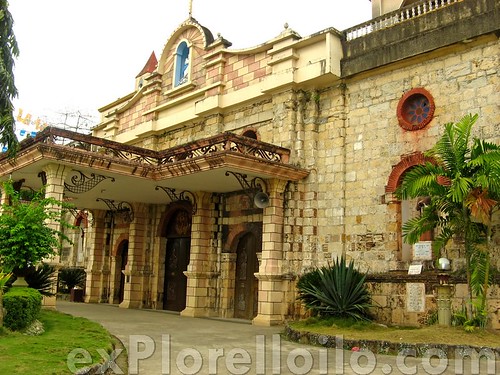
Finished in 1899, the beautiful three nave church of Pavia was built through the advocation of Santa Monica. The overall design is byzantine. It is architecturally distinct since most churches in Iloilo are of Baroque and Neoclassic styles. However the church is found under the Romanesque order. There is a copperative symmetrical movement on the facade brought by the complimenting effects of the rose windows and the arch entrances. The semi circular apse of the church completes its overall Romanesque design.


Want To Know More About Iloilo?